
The KLF – Chaos, Magic and the Band Who Burned a Million Pounds – John Higgs
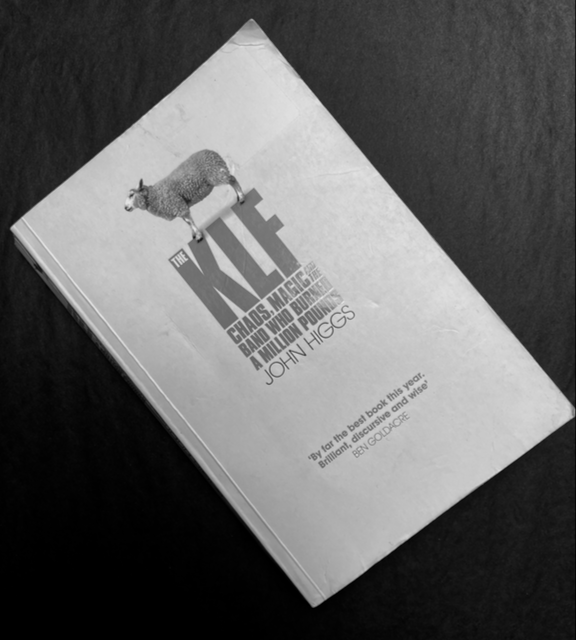
This is not a new book (2012) but still available, and The KLF are certainly no longer active – at least not in any public way. The KLF, however, remain an enigma; a riddle, an infuriating mystery or, to some, simply a pair of Situationist Arseholes laughing behind their sleeves at everyone else's expense.
This book tries to put them into context. It looks for the common threads running through what they were doing and attempts, at least in part, to explain why they might have been moved to do all that they did. But, like all things fashioned from myth, magic and mayhem, any lasting resolution remains frustratingly elusive.
What it does offer are fascinating avenues of thought. There is plenty here to get you thinking, and, long after you've finished the book, ideas continue to surface in unexpected ways. Primarily, it's a book about Art. Some of it is about Music and Magic and Money, and the role of the latter three in service of the former.
The KLF (and it seems obligatory to say, also known as The Justified Ancients of Mu Mu), comprising Bill Drummond and Jimmy Cauty, were a British electronic music duo who produced a string of much-loved hit records in the late 1980s and early 1990s.
Both men were experienced old hands in the music industry. Drummond had managed Echo & the Bunnymen and The Teardrop Explodes, while Cauty had been a member of Brilliant (which also included Youth from Killing Joke). They instinctively knew how dance records should be put together. KLF tracks contained every sample, hook, riff, line and moment of excitement in exactly the right place, all serving the song.
They also knew how to manipulate the media. Through cryptic advertisements, bizarre pronouncements and elaborate acts of myth-making, they kept journalists and the music industry permanently off balance. Everyone wanted to expose them as attention-seeking shysters, yet nobody was ever entirely sure whether that was the point or simply another layer of the joke.
Their records sold in enormous numbers, making The KLF very rich. But wealth always seemed to be a means to an end rather than the end itself. The money enabled the Art and the exploration of Magic.
It feels strange, perhaps, to talk about magic as though it might exist. In the real world we like to think we understand the tricks and illusions of the modern magician. This book, however, explores that liminal space between disbelief, wanting to believe and belief itself. It suggests that magical thinking – thinking about things that can't possibly be true – can open unexpected “doors of perception” and ways of seeing the world.
Then there is the Money.
The KLF seemed to have little interest in the financial rewards of what they had created. Money, to them, was something that could always be made again. Yet money holds the world in thrall – a word whose original meaning is a state of servitude. Using money, spending money and giving money away all reinforce that enchantment. Money wants to move, to circulate, to become the be - all - and - end - all.
Even art that exposes the damage money inflicts on society is eventually adopted, compromised, absorbed and put to work in the service of the market. Picasso. Banksy. The Sex Pistols.
The KLF wanted to challenge money itself. They wanted, in some impossible sense, to beat money.
So, on the night of 23 August 1994, on the Scottish island of Jura, they burned £1 million pounds. The Art, such as it was art, was not the spectacle, which was unremarkable. It was the audacity of the act. The fact that they actually did it and have to live and reflect on that fact for the rest of their days.
That, at least, is what I think this story tells me.
It may tell you something entirely different.